The Zipline and the Race
A Tale of Two Cities
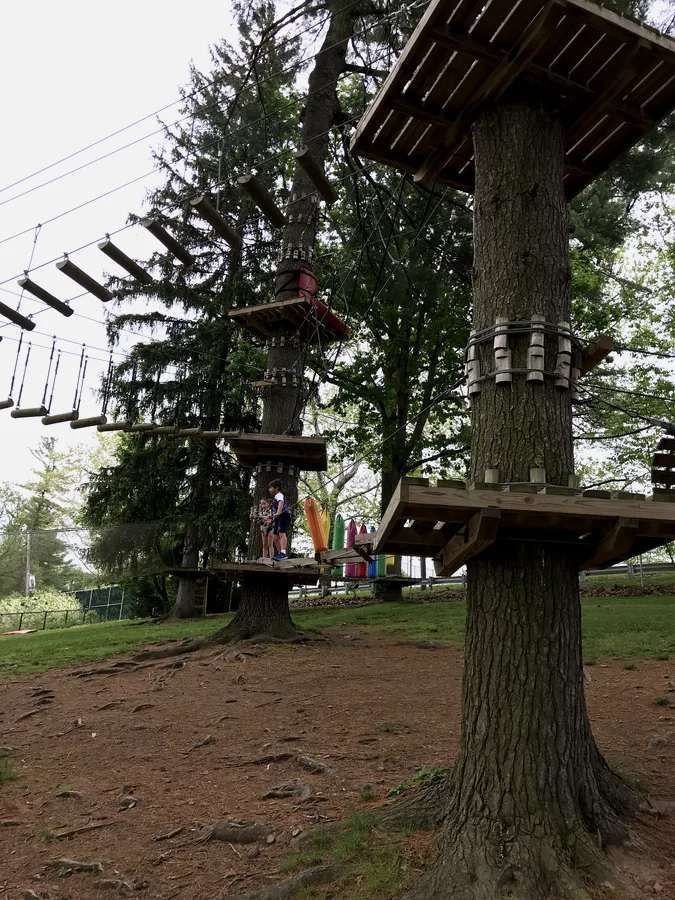
In my elementary school, my class took a field trip to Elmwood Zoo in Norristown, PA to zipline. For many of us, it was the first time standing at that kind of height, gripping a wire that swayed just enough to remind you how far the ground was.
One classmate shuddered. The heights, the shakiness, the sheer exposure of it — she couldn’t move. She stood at the edge in tears, and our teacher did neither the easy nor the hard thing: she did nothing. No comfort, no push. Just silence.
So, we did it instead.
One by one, those of us who had already gone came back. We stood beside her. We told her what it felt like. We offered to go with her. We didn’t minimize her fear — we just refused to let her face it alone. After many of us had spoken, she stepped up. Shaking, yes. But willing.
When she landed, we all broke into applause — not politely, but genuinely, as if every one of us had crossed something that day. Because in a way, we had.
Later, our teacher gathered us and held up her hand. She pointed to each finger — different lengths, different strengths, different roles — and showed how they only make a fist when they come together. She told us that what happened on that zipline was leadership. Not the kind that charges ahead and expects others to keep up. The kind that stops, turns around, and says “I’ve got you.”
That lesson never left me. Leadership is not about always being first. It is about reading the moment, rising to the occasion, sometimes even sacrificing what matters to you so someone else can find their footing. That day, many of us gave up a second run on the course so we could stand with her instead. None of us regretted it.
I think about that zipline often now, living in Silicon Valley, the most ambitious zip code in the world, where breakthroughs happen in garages and the gold rush never ended.
A friend told me recently that in her school, she has no friends — only competitors. She said it plainly, almost matter-of-factly, as if it were simply the weather. It shook me. Not because ambition is wrong, but because somewhere along the way, a classmate had frozen into a benchmark.
I dread the thought of spending seven hours a day surrounded by that feeling. Of walking into a room and calculating rather than connecting. What produces such a thought in a teenager? Is it the parents? The college admissions machine? The culture that worships the outlier and quietly discards the rest? Perhaps all of it.
And sometimes I wonder what it means that we can all see the loneliness and quiet selfishness this system produces, yet continue feeding it as if competition were a law of nature rather than something we chose to build.